Fixing a snapped aluminium tube on a Lovens Explorer with a piece of copper pipe
One of the aluminium tubes on our Lovens Explorer bakfiets snapped clean through. A short length of 12 mm copper pipe left over from a plumbing job turned out to be the perfect sleeve — no new part, no waiting.
What broke
Our Lovens Explorer has a set of thin aluminium tubes that hold up the rain tent. They are light, they flex, and they join with the same push-fit ferrules you know from a camping tent. One of ours snapped clean through, just above the bend at the bottom.
A thin-walled aluminium tube that has failed like this is not something you can glue. The two ends no longer sit straight against each other, and every gust of wind works on the joint. Either the part gets replaced, or the break gets a splint.
Why not just order the part?
Honestly: I did not want to wait. A replacement means finding the right dealer, a lead time, and a price for what is essentially a metre of tube — and in the meantime the tent is down and it is raining.
The sleeve
An internal break gets an external splint. That is the oldest fix there is, and it works because the sleeve takes over the bending load; the aluminium inside only has to stay put.
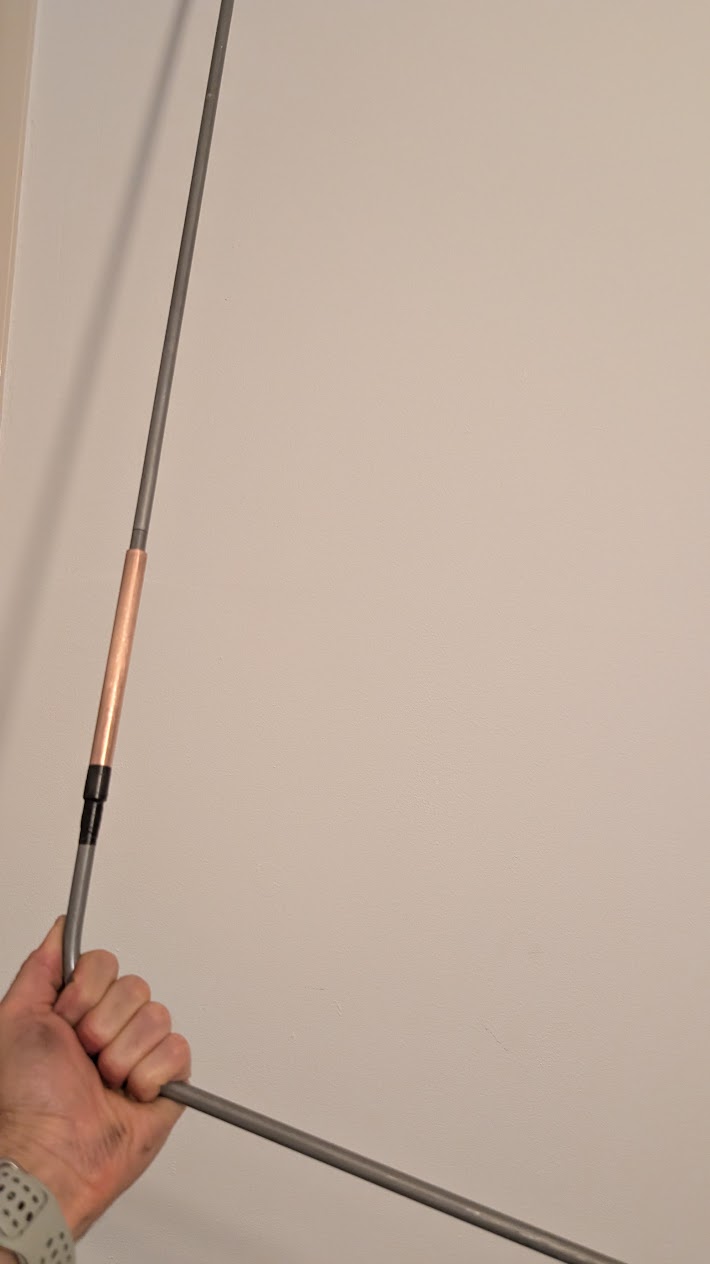
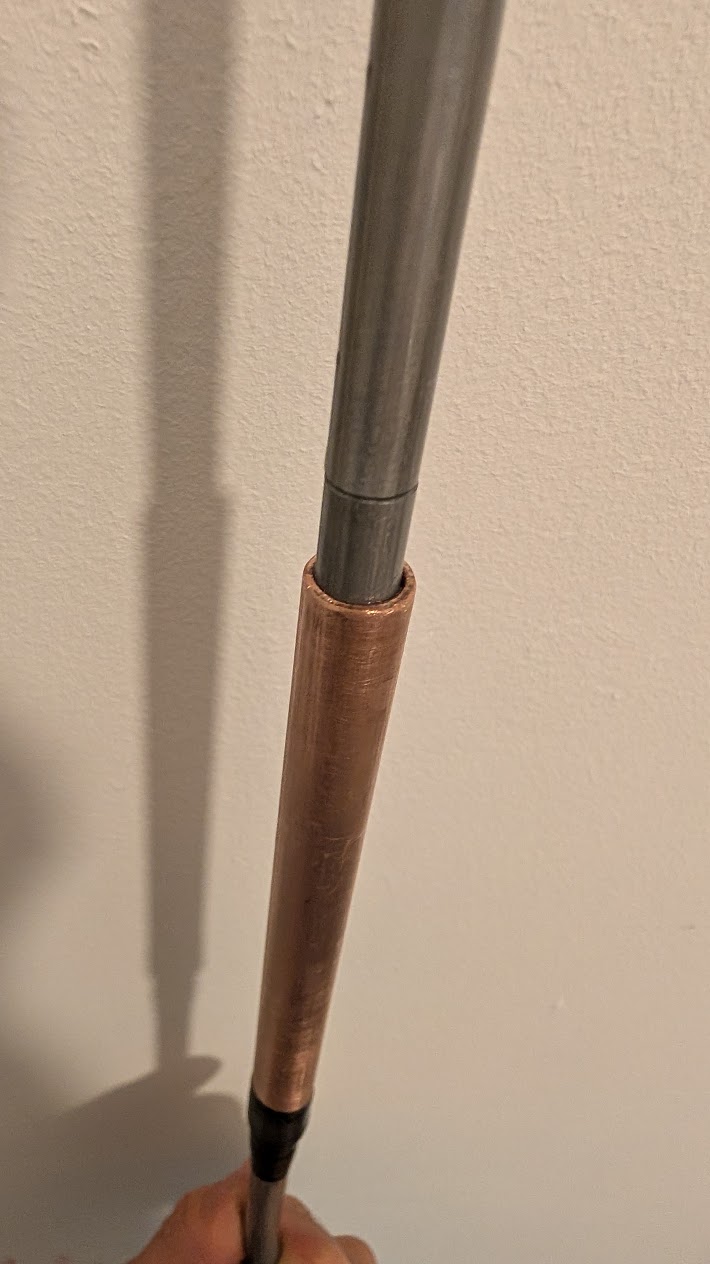
I had a leftover piece of 12 mm copper pipe from a plumbing job. Standard 12 mm copper has a 1 mm wall, so the inside is 10 mm — and the aluminium tube is about 10 mm. It slides over with almost no play, which is exactly what you want: snug enough not to rattle, loose enough to get on without a hammer.
- Cut a piece of copper pipe about 20 cm long. A pipe cutter gives a clean end; a hacksaw is fine too. Either way, deburr the inside edge with a round file or the back of a knife, otherwise it scores the aluminium as it slides on.
- Clean up the two broken ends of the aluminium tube and take the burrs off, so they slide into the copper instead of catching.
- Slide the sleeve over one half, then feed the other half in from the other side until the break sits roughly in the middle of the copper.
- Wrap a few turns of electrical tape where the copper meets the aluminium at the lower end. It stops the sleeve creeping down the tube and covers the edge so it cannot chafe the tent fabric.
A word on copper against aluminium
Worth knowing before you copy this: copper and aluminium touching each other in the wet form a galvanic couple, and it is the aluminium that corrodes. For a tent bow that lives under a fabric cover and dries out between showers, I am not worried about it. If this were a part that sits wet all year — a frame member, anything near the wheels — I would use a stainless or aluminium sleeve instead, or at least put a layer of tape between the two metals.
And to be clear: this is a splint for a tent pole. I would not do this to anything that steers, brakes, or carries the children.
Does it hold?
So far, yes. The joint is stiffer than the original tube, so that bow flexes slightly less than the one on the other side — not something you notice once the fabric is on. Cost: nothing, it was all in the house already. Time: well under half an hour, most of it filing.
Parts and tools
| Item | Note |
|---|---|
| Copper pipe, 12 mm, ~20 cm | leftover from a plumbing job — any DIY shop sells it by the metre |
| Electrical tape | a few turns |
| Pipe cutter or hacksaw | |
| Small round file | for deburring both metals |